
Crawl & indexing
Find what search engines can and cannot reach: orphan pages, redirect chains, duplicate content, canonical conflicts and wasted crawl budget.
- Index coverage review
- Redirect & canonical cleanup
- XML sitemap hygiene

Great content on a technically broken site is a billboard in a basement. We find the crawl, speed, structure and schema issues holding your site back — and fix them in the order that matters.
Trusted by








Technical SEO is the work of making your website easy for search engines and AI systems to crawl, understand, index and trust.
It covers indexing and crawlability, site architecture, page speed and Core Web Vitals, mobile usability, structured data, redirects and canonicalisation. It rarely produces instant wins — but without it, every other SEO dollar works harder than it should.
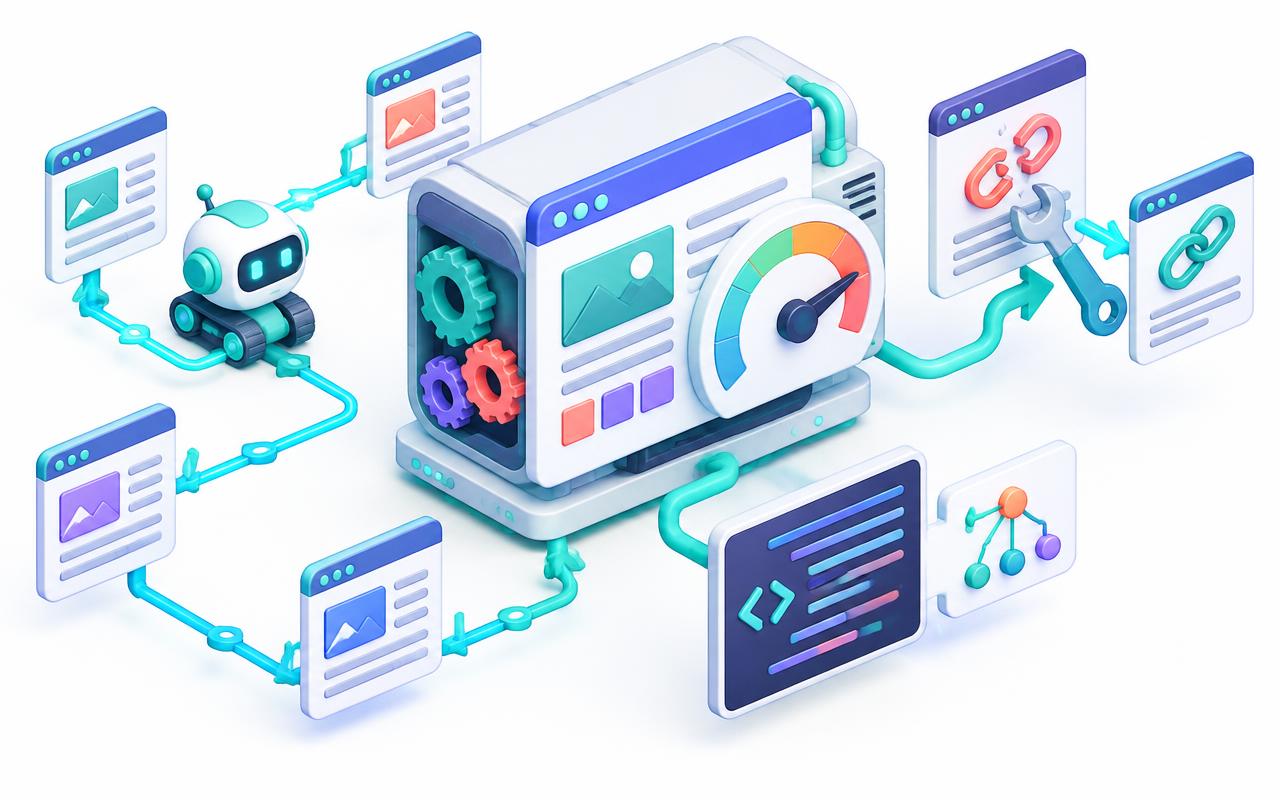
Find what search engines can and cannot reach: orphan pages, redirect chains, duplicate content, canonical conflicts and wasted crawl budget.
Slow pages lose rankings and enquiries. We diagnose the real bottlenecks — images, scripts, fonts, hosting — and fix or ticket them with expected impact.
Logical site structure helps users and crawlers. Structured data helps search engines and AI systems understand your services, locations and credentials.
A clear process, agreed before work starts. You always know what is happening, why, and what it is expected to change.
Run a full technical crawl and combine it with Search Console data to see your site the way search engines do.
Separate signal from noise: which issues actually affect visibility and enquiries, ranked by impact and effort.
Implement fixes directly where we have access, or hand your developers clear, tested tickets.
Track indexation, errors and Core Web Vitals over time so regressions are caught early.
B2B websites accumulate technical debt differently: gated PDFs that hide your best content, faceted resource libraries, multiple acquired domains, legacy campaign pages and JavaScript-heavy builds that look great and crawl terribly. We have seen these patterns before and know which ones are worth fixing.
Thousands of product pages existed but barely any were indexed — parameter URLs and duplicate category paths confused crawlers. Canonical rules, a cleaned sitemap and internal linking brought the catalogue into the index. This is an illustrative approach, not a client result.
Recommendations follow Google Search Central guidance. No link schemes, doorway pages or shortcuts that put your domain at risk.
You see what was changed, why, and which metric it should move — organic enquiries, qualified traffic and AI citations, not vanity numbers.
Content is mapped to how Australian B2B buyers research: problem, comparison, shortlist and procurement questions.
If SEO isn't the right lever for your business yet, we say so on the first call rather than selling a retainer.
Google and AI assistants can only recommend pages they can reach and read. Technical health — fast load times, clean structure, working metadata — is the entry ticket, and it is checked before anything else ships.
Pages rank and get cited when they answer the specific questions buyers type, speak or ask an assistant. Every page targets a real question your customers ask, not a generic keyword list.
Mentions from industry directories, associations, media and partners tell Google and AI models your business is real and recommended. That reputation is built steadily — never with risky shortcuts.
Google AI Overviews, ChatGPT and Perplexity quote the clearest, best-structured sources. Structured data, direct answers and consistent business facts are what make a page quotable.
Common signs: pages missing from Google's index, slow load times on mobile, traffic drops after a redesign or migration, and Search Console coverage errors. A crawl and index review confirms it quickly.
Both, depending on access. On platforms like WordPress we usually implement directly. For custom builds we write developer-ready tickets with acceptance criteria and review the implementation.
It removes the ceiling. Technical fixes let your content and authority work properly, but they are rarely sufficient on their own — which is why we pair them with content and local work.
After any redesign, migration or major release, and at least quarterly otherwise. Sites change constantly; monitoring catches regressions before they cost enquiries.
Bring your website URL to a free 30-minute call. We'll discuss your starting point, the work worth prioritising and how progress should be measured. No obligation.
Work directly with Acumind from anywhere in Australia. Explore the approach for your city — without invented offices or copy-and-paste suburb pages.